
Chapter One: Abraham and Sarah
Despite the OAS’s secret warnings, Abe and Sarah had traveled to Paris for a vacation to save their marriage.
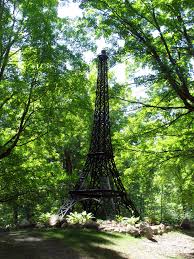
They were strolling toward the Eiffel Tower along the Avenue General Ferrie where they’d enjoyed their first date, twenty years ago when they were high school freshmen. Abe’s grandparents paid for his trip. A decade later, he found out they had also paid for Sarah’s; the best separate hotel rooms, museum tours, and rose petals sprinkled to create a path just for them. At the time, Abe thought he just happened to be dating this special girl he’d always liked since kindergarten. Little did he know what his grandparents were arranging. Abe and Sarah married four years later.
Now they were thirty-five, looked twenty-nine, and Sarah, Abe knew, still wanted to imagine that they had their whole life in front of them.

But despite all he had done for his country, the world was going to hell. A dozen democracies had collapsed into dictatorships. Oil-producing nations were falling into starvation. In Bolivia, the average person had lost thirty pounds because they’d run out of food, the borders were closed, and people were eating cats and dogs. In Bolivian prisons, people killed and cooked rats. Doctors performed heart surgery by the light of their phones, charged with home generators, because the capital city had constant blackouts. The dictator, Carlos Mentiroso, won reelection with 81% of the vote. The OAS (Organisation Armee Secrete) knew the election was stolen.
And that was just one country. South America was on the verge of a multinational war, which was sinking the world economy. Across the globe, politicians accused each other of treason. And the slave trade was somehow growing. To fifty million people. In a hundred countries.
“Did your grandparents marry here?” Sarah took Abe’s hand and surged her body into his as they strolled under a canopy of October trees as they approached the Avenue Pierre Loti. All around them, boys and girls chased each other in the meadows, laughing. Abe tried to live in this moment, appreciate the fiery leaves, and admire Sarah.
She kept her body fitness-trained for him. An ER nurse, she saved lives everyday. She built up her mind with books. With their money and advantages, they earned everything that she wanted—except he couldn’t give her what she truly desired.
“They married in the countryside in 1940,” he said. “On the day France fell to Hitler. I guess they figured: life is short.”
She laughed. His grandparents were turning one hundred. They strolled onto the Avenue of Saints.
“Didn’t your grandfather try to kill him?”
“That was my grandmother,” he said. “De Fuhrer survived, obviously, but was so spooked he went back to Berlin and plotted the invasion of two more countries. And Grandma stayed in France—supposedly as a nurse—while Grandpa infiltrated Eastern Europe.”
“Aren’t they adorable?” Sarah gazed at the nearby kids, who were climbing from trees. A boy and a girl were hanging upside down from a tall branch. “They remind me of us.”
“Who? My grandparents or those kids?”
“Both.” Sarah kissed his cheek.
“Such a beautiful day,” he said. His fingers laced hers and she swung his arm like a kid. “Want to go indoors?”
A hundred meters ahead, a dozen youths dressed in brown crossed the sidewalk from barren trees that already had shed all signs of life.
“How are they like us?”
“They married young. And it took them years to have a child.”
“That was different,” he said.
“It was the same.” She was playfully punching his ribs. She knew he liked that. “They knew each other since they were four. Just like us. They got married when they were twenty, in the midst of a war, just like us.”
“Despite everyone’s best advice.” He teased her with a pretend frown.
“Oh?” She pretended to be offended. “And you served our country just like your grandpa, while your grandma pursued a medical career—just like me.”
She’d skipped the part where they’d conceived a child on their wedding night, but had miscarried later. In a similar way, twenty-one-year old Sarah and Abraham had lost a child. Both grieved and comforted each other, and were finding enough peace and courage to try again when Iraq spun out of control, and their whole lives and the world grew angry.
Abe had gone to Afghanistan. And then Iraq. And then to a dozen other places. He had no real job title, just like his grandparents. His task? To preempt messes before they happened.
“You served with honor and courage,” she said. He could she tell she had read his mind and was thinking of the miscarriage. It hulked like a lead wall between them. The miscarriage was a tragedy, a part of life, but he hated to talk about it. Even now, eighteen years after it happened, she was trying to change the subject so he wouldn’t dwell on it.
Fifty meters ahead, amidst a dozen youth wearing brown, metal glinted.
“Gun!” Abe retrieved his cell phone and pressed speed dial one. “Call the police,” he said to Sarah, who had her phone pressed to her ear. “Go back the way we came.”
“What are you going to do?” Sarah asked him, her face abruptly tormented with anxiety.
“Never mind that. Go!” He gave her a gentle push but she didn’t move.
“Mr. Sawyer,” said his work friend, Chloe, who fed him satellite and every other kind of data in real time.
“Twelve Brown militants in the Champs Elysees Park, 500 meters from the Eiffel Tower, avoiding the trails, traveling through the woods, now on the sidewalk.”
“Armed?” said his phone.
“Most likely.”
“But you don’t know.”
Run! he ordered Sarah. She shook her head.
From her phone, Abe heard the operator say “Quelle est votre urgence?” What is your emergency?”
In French, Sarah relayed the situation.
“Just send a team, Chloe,” Abe said. “What have we seen all month?” Paramilitary gun battles in the streets. One group of thugs wore brown shirts; the other dressed in navy like 1950s factory workers. Both groups shouted that they opposed “the secret arrangements” or whatever bullshit sounded persuasive to an anxious, fractured public who needed to know why they grew poorer as their families fell apart and their cities became bloody. They shot each other near tourist cafes and drew civilians into it. The Paris death wave topped 200 people last month.
And yet Abe and Sarah had gone to Paris anyway. She’d always wanted to return, and in the last two weeks, the OAS and others claimed they’d wrested the upper hand back from the two paramilitaries that hated each other: known in most countries as “the Browns” and “the Reds.”
“They’re on their way,” said Abe’s friend, Chloe.
“Thank you.” He hung up. “You are only going to slow me down,” Abe told Sarah. He retrieved a pocketknife—the only weapon he had.
“I’m staying with you.”
“Sarah, we don’t have time for—”
“I don’t feel safe retracing my steps.” She looked afraid, this 5’4”, 110-pound love of his life. “You’re the safest person for me to stay with.”
A terrifying shriek. One hundred meters ahead, a young woman was yelling Run! at a dozen children. A grade school class, Abe realized.
A gunshot.
“Follow me.” Abe pulled Sarah off the sidewalk and into the forest.
“What are we—”
“Shhh,” he told her.
Pop. Another lone gunshot. They were now forty meters deep among thick oaks. Abe stopped. Sarah was glistening. Her blue eyes were wide with fear.
Abe pointed upward. She narrowed her eyebrows.
Gently, he held her shoulders, gave her a quick kiss, and pointed skyward at the treetops.
When she understood, she shook her head violently. “What are you going to do?”
Bang. From a soccer field away, panicked cries made him angry and ready to take action. “Stop them.”
“With what?”
“Sarah, please stop questioning me,” he said. “Every moment I’m not there, someone could die. I need you up in this tree. Please.” She was fast, but he seized her foot.
Her eyes widened in alarm. She pointed, and he whirled.
Six men in black pants, Kevlar vests, and black hats with silver skull and crossbones were forty yards away. Hastily, Abe pressed Sarah and himself against an ancient oak.
Who are they? she whispered.
They’re the shock troops of the Browns. Ex-military and angry, Abe whispered back. He grimaced. Where the hell were the re-enforcements he’d called in?
Sarah was trembling. An E.R. nurse, she’d treated bullet wounds and victims of bomb blasts. And he’d taken her shooting. But she’d never done what he had done.
Pop pop pop pop pop. From the Eiffel’s reflecting pool came nightmarish shrieks. The security footage would make worldwide news, Abe realized, and a set off a wave of copycats. Children panicking and running, adults trying to lead them to safety, but no place was safe as the Browns and Reds murdered each other on the walkways.
“Stay here,” Abe said, and dashed toward the six armed men.
“Abe!” Sarah hissed. He could picture the anguish on her beautiful face but he didn’t look back as he approached a giant oak with eight limbs like an octopus.
The shock troops moved swiftly forward. Abraham Sawyer dashed from tree to tree in pursuit. He was twenty meters behind. They each had pistols. Soon, they would emerge from the trees.
Bang bang bang. “Die nationale Revolution ist ausgebrochen!” declared a Brown from the walkway.
Ten meters. Half of the Browns weren’t even French, Abe thought pointlessly. They’d left France, and now returned to take it back from the “November Criminals,” their name for the “weak” parliament that “surrendered” to “pressure” from other nations. They hated negotiations of any kind, democracy, and the voting that only led to “more debates that never solved the workers’ problems.”
Five meters. When the last Brown lagged behind, Abe sprang. He stabbed his knife’s blade seven centimeters deep into the man’s shoulder. The man would pass out, live, and get captured for later questioning.
As the man howled, Abe gripped him around the neck and used him for a human shield. He seized the man’s pistol as the others whirled. Bang bang bang. Abe got off three shots as the last two Browns fired, then scrambled to take cover behind twisted limbs. Abe aimed below one man’s vest and pulled the trigger. The first black-clad counter-revolutionary jolted, collapsed atop his shattered knee, and howled.
Bang. A second methodical shot. The man cried out and stumbled sideways, his face hitting dark wood.
Pop pop pop pop pop pop. The third emptied his gun. Bullets impacted Abe’s hostage’s bulletproof vest, now covered in blood, as the weakened man writhed. “Nein, nein,” he cried, his voice faint. Abe had intentionally not stabbed him the jugular. Both sides usually fought to the death, and Abe wanted the OAS to interrogate someone.
Abe took his last shot and missed. We’re both out.
The men on the ground were twitching, but some were crawling for their guns, which they’d lost when Abe shot their knees.
Pop. A man reached his gun, fired, and Abe’s shoulder was on fire.
Abe was scrambling for another gun. Pop pop pop. The bleeding man was panting. He looked disorientated but still fired. Abe reached for a .44—
—when Sarah swung a stick like a baseball bat and struck the man’s skull.
A sickening crack as half the stick flew several meters before bouncing off a tree. As the shooter’s body wobbled unnaturally like he had neurological damage, blood gushed into his hair, and he passed out.
“I told you to climb that tree!” Hastily, Abe fired five more times and gave each man a second flesh wound. He and Sarah scrambled to retrieve all of the guns.
“I just saved your life!” she said.
“Thank you.” With the butt of a .44, he hit a killer in the temple. Abe was systematically incapacitating them all. “I had it handled.”
“You’re shot.”
“Superficial.” He gazed forty meters through the woods toward the reflecting pool. “Where are the re-enforcements?”
Abruptly, they heard more gunfire. Abe ran toward the screaming.
“Abe!” Sarah yelled.
“Damn it, stay back this time!” he said. She now had two guns, like him. She could defend herself if she’d just retreat.
As he emerged on the sidewalk on a cloudless, perfect day, he saw two dead Browns face down in a pond of blood. The blood glinted crimson in the sunlight.
“Arrêt!” Halt. Abe froze.
“Drop your weapons!” the captain yelled in French. He was sickly thin and and hobbled toward Abe. Is he shot? But Abe didn’t see any blood. The frail cop had a club foot.
“American OAS,” Abe said. He indicated his chest pocket, and slowly reached for his I.D.
“Freeze!” the man shrieked in English.
“My I.D.,” Abe said. “My wife and I just encountered six Brown shock troops in the woods.”
Above came the wind and roar of helicopters. Six. The police. Thank God. And if they were here, most likely so were the OAS. Silent. Inconspicuous.
“Did you kill them?” the cop snarled.
“We—” Sarah began. She was panting, and pointing both guns at the ground.
“We evaded them.” Something about the cop was making Abe lie.
But the cop was raising his weapon to Abe’s face—
Whirling an arm, Abe simultaneously feinted left, ducked, and struck the policeman’s wrist. The cop’s gun discharged centimeters from Abe’s eye. Gunpowder residue hit his cheeks, hot and dirty. But the man missed. As the emaciated, fake cop struggled to jam his pistol’s barrel in Abe’s eye, Abe speared him with his fingertips below the sternum.
As the cop sucked for air, Abe broke his nose. As the man’s blood spurted, Abe floor-swept him to the ground and dropped a knee on the man’s chest, pinning him flat. He ripped open the man’s shirt.
Underneath his stolen cop clothes, the frail man wore the crimson and gold medallion of the world order of the Reds.
Abe cursed. This man was here to kill Browns and civilians. Abe pressed his fingertips against the man’s jugular.
“How many of you are in the police?” Abe demanded.
But the man bit down hard. Too late, Abe tried to pry open the man’s mouth to save the fake cop’s life, but Abe had to pull his head away from the nauseating fumes of the chemicals now spraying from inside the man’s suicide tooth. The man rattled, frothed, and bled from the ears—and then he died.
Sarah and Abe looked at each other. Neither said anything.
“Let’s get out of here,” Abe said.
In scattered locales, they saw the police subdue both Browns and Reds. A few tourists and French citizens had died, but mostly, the rival paramilitaries had focused on each other. Like 1930s revolutionaries, they killed their opponents and claimed to speak for the forgotten public.
“Is everyone safe?” Sarah asked. She’d retrieved their four guns and handed Abraham two.
“The police have it.” He was already moving down the Avenue Gustave Eiffel toward downtown Paris. They would wipe the guns, discard them in the trash, and rely on the OAS to get them out of the country. The OAS: missing in action.
She met his pace, an eight-minute mile. “He was dressed like a cop.”
“But he had a Red medallion.” At the edge of the park, Abe wiped his guns with his filthy shirt—it had his blood, and the SP man’s vomit—and tossed them into a pool of stagnant water. Sarah imitated him.
Her anxious face made him take off his outer shirt. Now he wore navy khakis and a blue T. He’d look like a nondescript tourist if it weren’t for the blood dripping from his arm.
“Your wound.” She looked anxious, desperate.
She took off her scarf and handed it to him. Wincing, he tied a tourniquet around it.
Posing now as victims, amidst the blare of ambulances, and people screaming and fleeing the carnage, Abe and Sarah crossed the street away from the park and moved toward the cafes on the edge of a Parisian shopping district.
“Let me treat your arm,” she said.
His phone buzzed. “Abe, are you and Sarah all right?” Chloe asked.
“Fine,” he said.
“I just played back the satellite coverage. You’re shot. I’m sending a van.”
“Are you watching us now?” he asked. The panic was spreading to the shops. Everywhere, people were scrambling to barricade themselves and their customers within their boutiques and salons.
The problem was: no one could trust anyone else. Both the Browns and the Reds each had fifteen percent support in the opinion polls. Each had candidates running for parliament—and other parties felt the pressure to adopt their mood. Everyone said, I condemn the street violence, of course—but I’m angry as hell, too.
So now, throughout both France and the world, lifelong friends hated each other. Even if they didn’t discuss politics, their lifestyle choices gave their sympathies away—and the citizens of many nations couldn’t forgive each other over anything.
All this meant: did you really know who you were barricading yourself in with?
“I can’t. You just led Sarah into an alley with canopies.”
“Where are we going?” Sarah asked anxiously.
Abe gave her a sympathetic look that said, Please trust me.
“Can you send a car to the corner of Bourdonnais and Rue de l’Universite?” he asked. “That’s an intersection. We’ll be there in four minutes.” Delicately, Abe held Sarah’s hand, and led her between two dumpsters that smelled of sauerkraut and alcohol. The alley was filthy; that’s why he chose it—because no one else would enter it. He’d put his phone on speaker so his wife could hear.
“No,” Sarah said.
No? Abraham asked her.
“Five minutes,” Chloe confirmed.
“Thank you,” Abe said. He stroked his wife’s palm; he hoped to soothe her. “Hanging up now.” He’d talk to her later about the support team that didn’t show up. People died. Abe wanted to know: what the hell happened?
Chloe said goodbye and they disconnected.
“I need a medic.”
She shook her head. “Please don’t leave me,” she said.
“Sarah, I need treatment.”
“I’m an E.R. nurse!”
He inhaled. He didn’t want to say this because they were caught in a loop, repeating the same argument, but—
“They’re going to need me.”
“But you said you were retiring from field duty.”
Everything I say is going to sound terrible. “Honey, you saw what happened. There were children in that park. Both the Browns and the Reds have infiltrated the police!”
“Other people can handle it.” She was pleading.
“They’re going to call me in.” Because he had eighteen years of experience. Because Grandpa pulled strings for him when he was seventeen and got him admitted in 2001. Because he spoke French, German, and three other languages.
His strong wife, who removed bullets from children caught in crossfire in Chicago’s worst neighborhoods, was on the verge of tears.
You promised to retire from fieldwork, she didn’t say.
I can’t, he didn’t reply.
But I want children, she didn’t add.
To which he had no reply.
“Sarah—” But his phone buzzed again.
What! Aggravated, he glared at the screen. Chloe’s encrypted icon—a cartoon cloak’n’dagger—popped up.
But before he could answer, his phone turned itself on. “Abraham and Sarah!” said a husky baritone.
But Abe hadn’t even pressed answer. “How—how did you…”
“You’re a busy man.” The ancient man said. “I’ll get straight to the point. Walk west out of that alley. A nondescript Fiat waiting for you. They’ll fix your shoulder and take you to a private airfield, from which you’ll fly to Colorado.”
“Grandfather, how did you hack into this phone?” Abe was stunned. How did you even get this number?
“That’s not relevant,” Grandpa said mildly. “Don’t worry, Abe. My people have already erased most of the satellite recordings of what you’ve done this morning. We’re still working on the OAS’s private servers, but the Russians, the French, and most others won’t know that you and Sarah were there. You’re free to come to our birthday party tonight.”
Birthday party?
Abe was so blindingly mad he couldn’t speak. His grandparents had raised him, and his three siblings. They’d given them everything, and brought out all of their talents. Because Grandpa pulled strings for him when he was seventeen and got him admitted in 2001. Almost never had they demanded—
—forced—
—compelled Abraham or anyone else to do anything. No, they had plenty of other ways to move people around like pieces on a game board. Usually, they made you think you came up with whatever idea they wanted you to implement.
“They need me, Grandfather.”
“Sarah’s right. Other people can handle it.”
How did you know she said that? “An OAS car will be waiting for us in less than a minute.”
“I cancelled that car.”
“You cancelled it?”
“Chloe’s with your grandmother and me on this. Relax, Abraham. Exercise mental dominance and put your mind in a meditative state. Grandma requests that you and Sarah, who personifies grace, attend our birthday party. We have business to handle.”
“Grandpa, the OAS—”
“—has reassigned you to Denver. If you don’t check into the Denver airport in twelve hours, you’ll be in a bureaucratic pit,” Grandpa said. “We’ve erased the recordings and altered the records. Come home with Sarah, Abraham. The world needs you both with us.”
Abraham was so angry he couldn’t speak.
“I know that, in your heart, you’ve been wondering why the OAS hasn’t been able to unravel the Browns or the Reds. Why can’t it penetrate their leadership? Are these revolutionaries really led from the bottom up? Or is a hidden arrangement at work?”
“And you know?” Abe asked. But how could the old man know what Abe didn’t—what seemingly no one in the American or Russian government knew? He was a hundred years old. He hadn’t worked for an agency since 1959.
“We’ll be there,” Sarah said. Abe held back from giving her a dirty look.
Global operative out-maneuvered by hundred-year-old World War II soldier, Abe thought.
“I love you, Sarah and Abraham,” Granddad said. “I’d appreciate it if you’d start walking.”
Abraham glanced throughout the alley. How does he know we aren’t moving? Abe didn’t see a camera.
“It’s on your phone,” Grandpa said.
But I deactivated the phone’s camera, Abraham thought futilely. “Yes, sir.” Abraham grimaced.
“I love you,” Grandpa,” Sarah said.
“That’s my girl,” said the old man.
“Hi, kids,” said an old lady’s voice. Grandma.
Sarah was already approaching the chaotic street. Hiding one gun beneath his shirttail, Abraham hurried after her.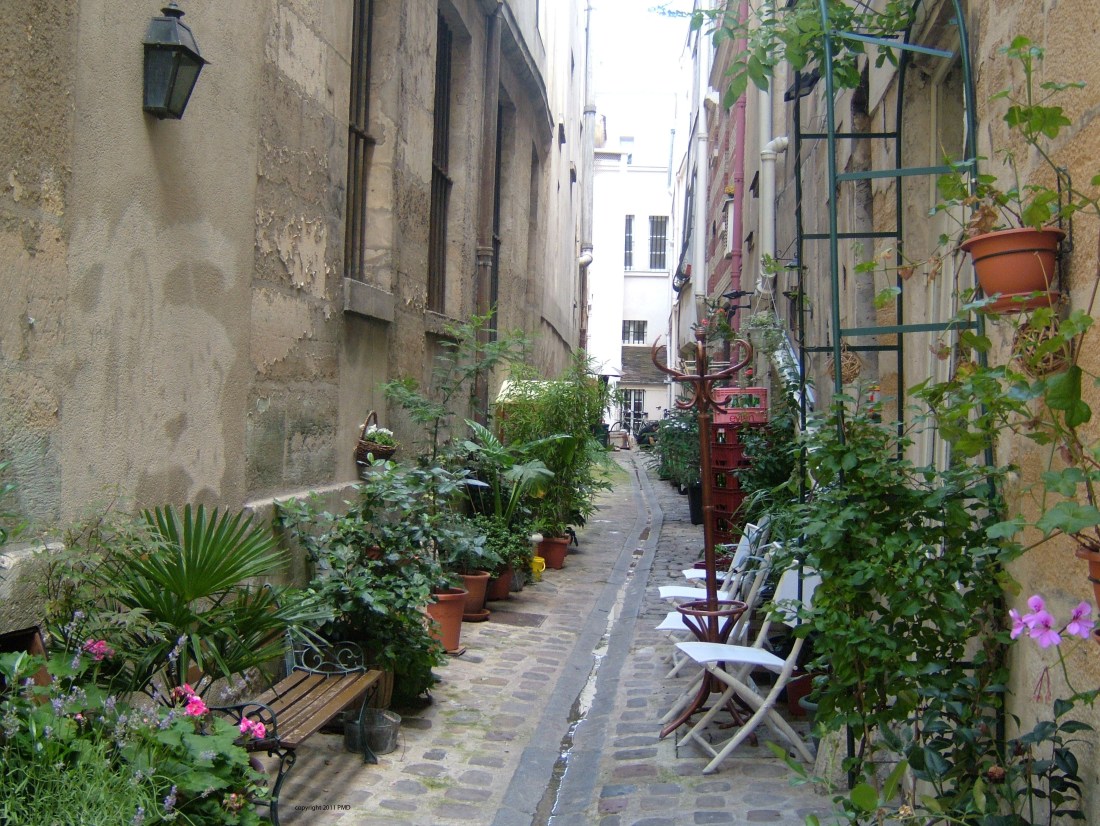
(If you want to read more, email me.)
(And if you’d like to help me set up a more elegant website for free out of the goodness of your heart, also please email me.)
 parisburning